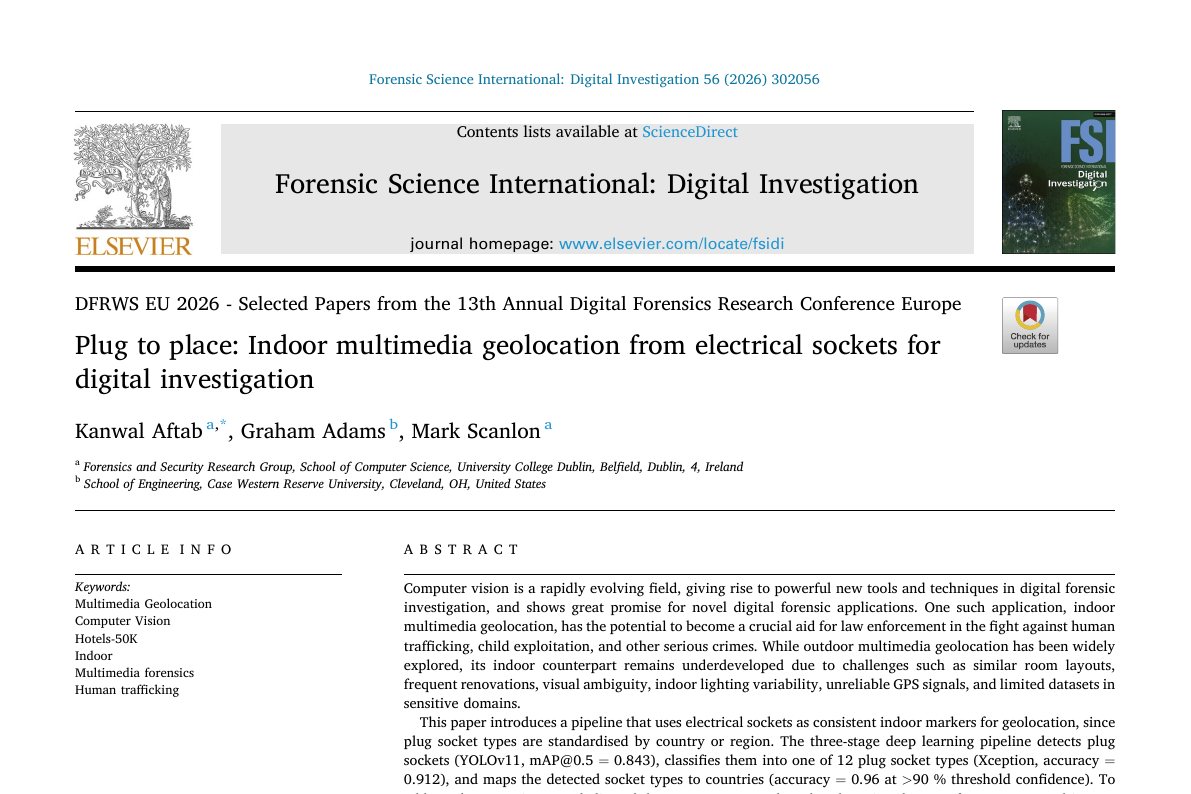
Plug to Place: Indoor Multimedia Geolocation from Electrical Sockets for Digital Investigation

This paper presents a novel approach to indoor multimedia geolocation using electrical sockets as consistent indoor markers for geolocation. A three-stage deep learning pipeline detects plug sockets, classifies them into standardized types, and maps them to countries. The approach is evaluated on the Hotels-50K dataset and demonstrates its practical utility for law enforcement in human trafficking investigations.

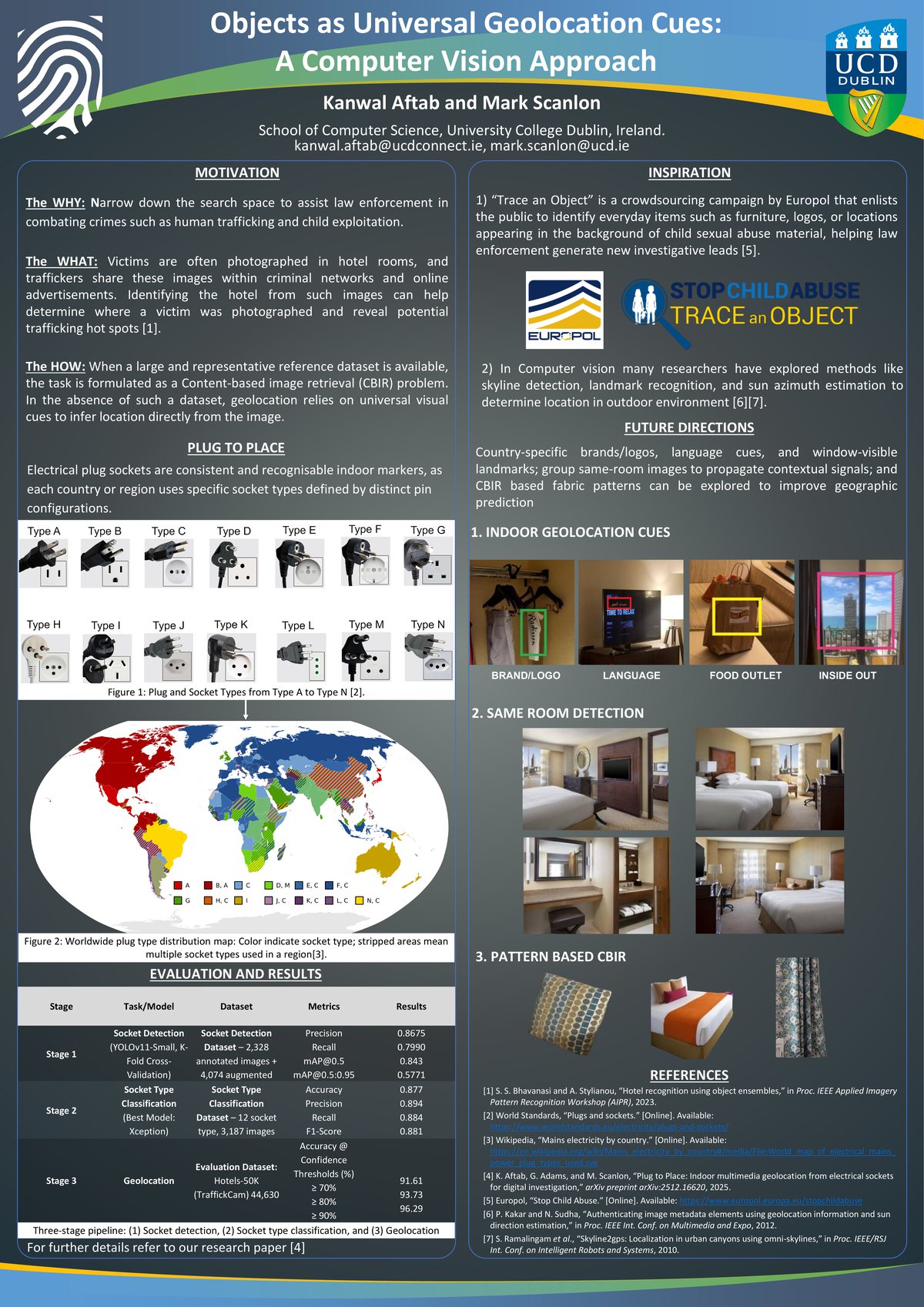
Objects as Universal Geolocation Cues: A Computer Vision Approach

This paper proposes a computer vision approach to geolocation using universal visual cues, specifically electrical plug sockets, to narrow down the search space for law enforcement in combating crimes such as human trafficking and child exploitation.

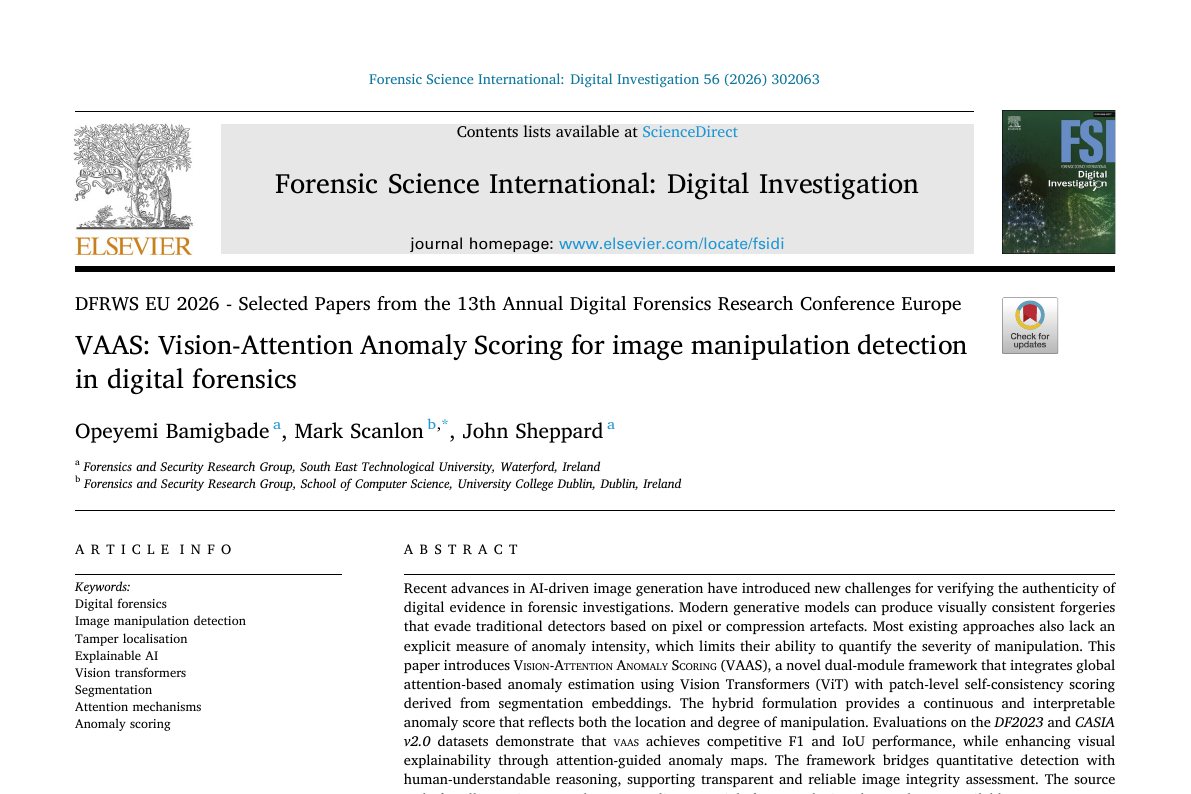
New DFRWS EU 2026 Publications

The group has new work appearing at DFRWS EU 2026 and in Forensic Science International: Digital Investigation.

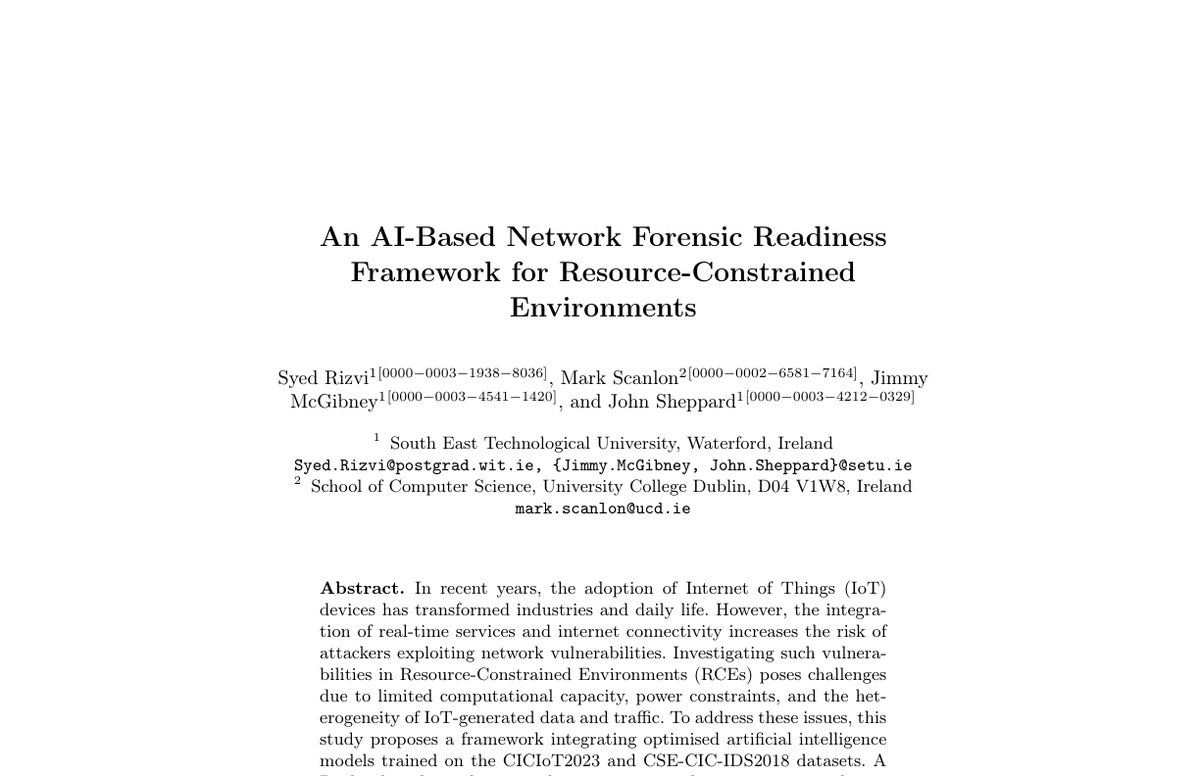
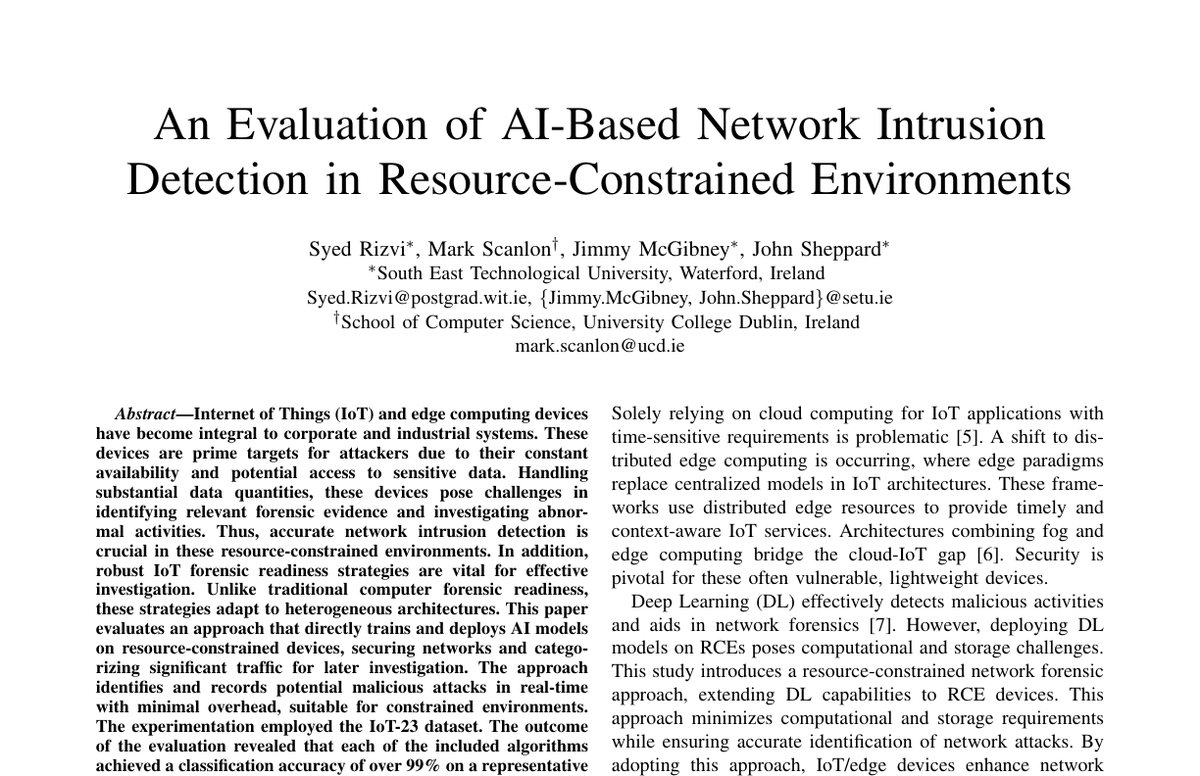
An AI-Based Network Forensic Readiness Framework for Resource-Constrained Environments

This paper presents an AI-based network forensic readiness framework for resource-constrained environments. The framework integrates optimised artificial intelligence models to detect attacks in real-time, capturing and preserving critical forensic artefacts. It aligns with ISO/IEC 27043:2015 Digital Forensic Readiness principles, reducing time and human effort.

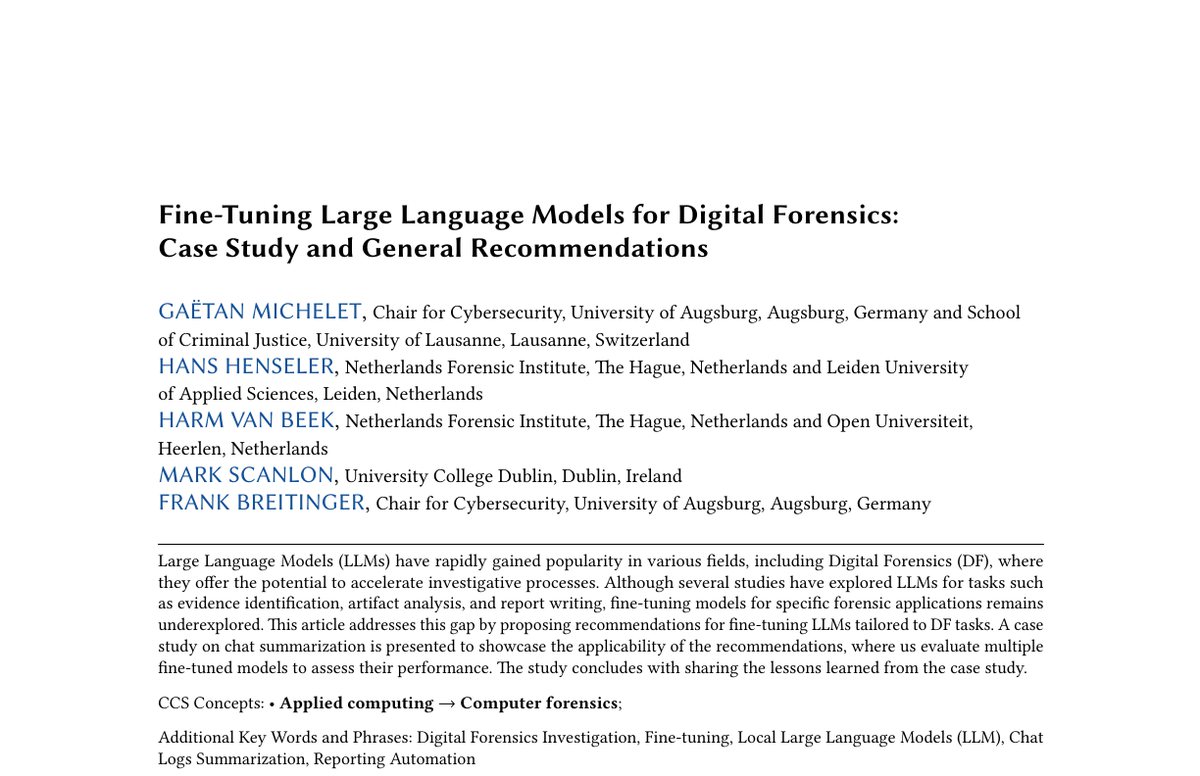
Fine-Tuning Large Language Models for Digital Forensics: Case Study and General Recommendations

This paper proposes recommendations for fine-tuning large language models (LLMs) for digital forensics tasks, addressing the gap in existing research. A case study on chat summarization showcases the applicability of the recommendations, evaluating multiple fine-tuned models to assess their performance. The study shares lessons learned from the case study, providing insights into the fine-tuning process, computational power issues, data challenges, and evaluation methods.

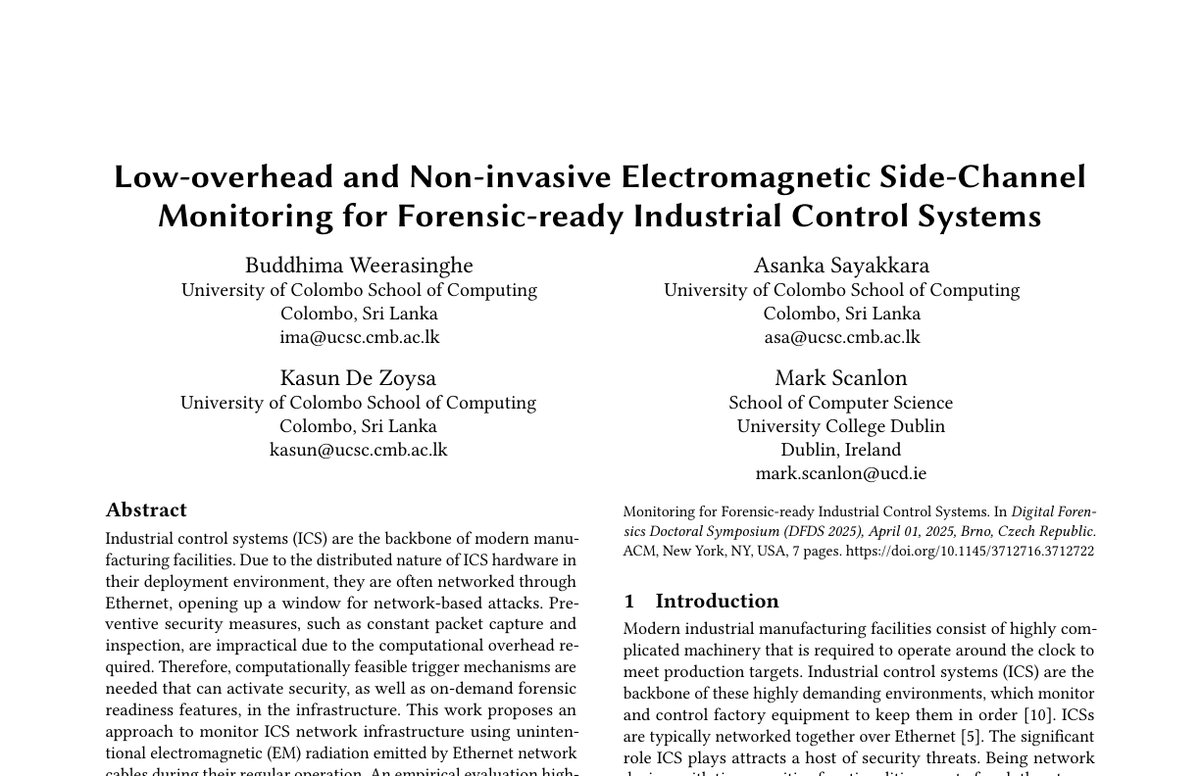
Low-overhead and Non-invasive Electromagnetic Side-Channel Monitoring for Forensic-ready Industrial Control Systems

This paper proposes a low-overhead and non-invasive electromagnetic side-channel monitoring approach for forensic-ready industrial control systems. It uses unintentional electromagnetic radiation emitted by Ethernet network cables to detect denial of service attacks with considerable accuracy, introducing an architecture for ICS infrastructure to be forensic-ready with minimal computational resources.

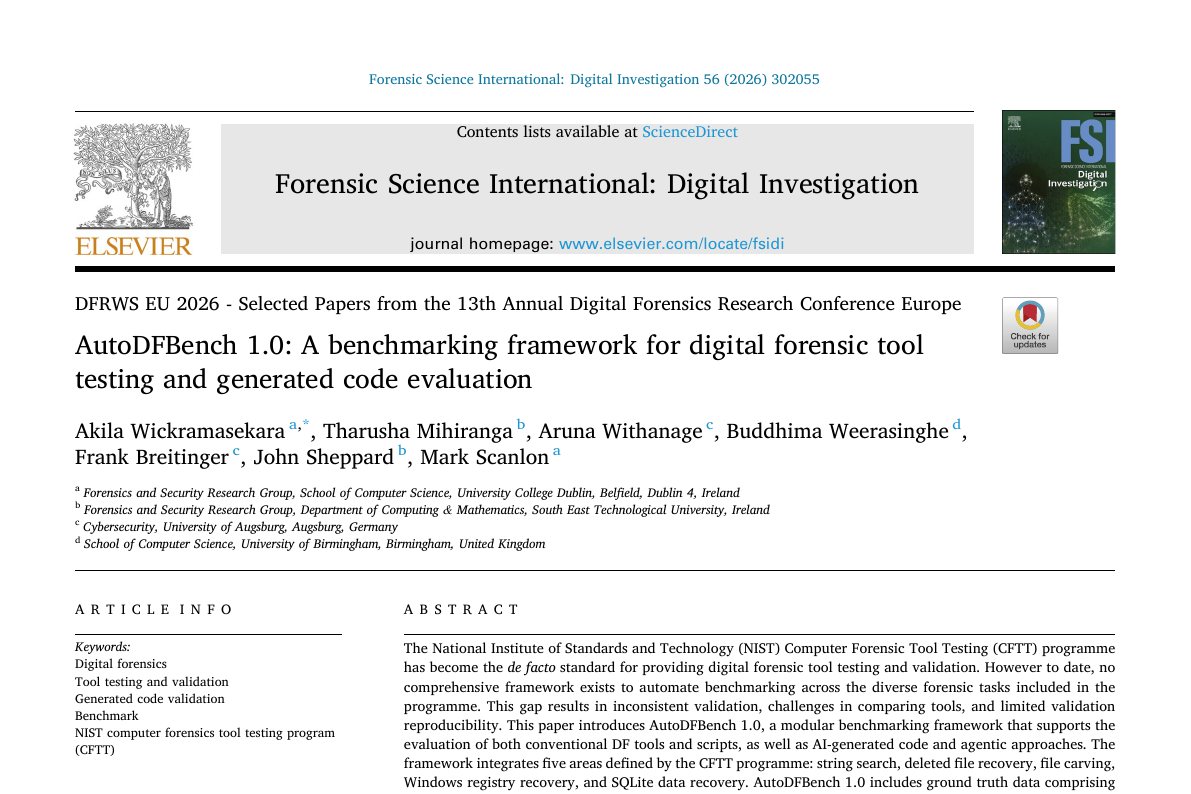
AutoDFBench: A Framework for AI Generated Digital Forensic Code and Tool Testing and Evaluation

AutoDFBench is an automated framework for testing and evaluating AI-generated digital forensic code and tools. It validates AI-generated code against NIST's Computer Forensics Tool Testing Program (CFTT) procedures and calculates a benchmarking score. The framework operates in four phases: data preparation, API handling, code execution, and result recording with score calculation.

Exploring the Potential of Large Language Models for Improving Digital Forensic Investigation Efficiency

This study explores the potential of Large Language Models (LLMs) in improving digital forensic investigation efficiency, addressing challenges such as bias, explainability, censorship, and resource-intensive infrastructure. A comprehensive literature review highlights the current challenges in digital forensics and the possibilities of incorporating LLMs, with a focus on established models, methods, and key challenges.

Perceptual Colour-based Geolocation of Human Trafficking Images for Digital Forensic Investigation

This study investigates the effectiveness of colour-based descriptors in Content-Based Image Retrieval (CBIR) for human trafficking image analysis. The research evaluates the impact of various parameters on image matching accuracy, achieving a Top-50 accuracy of over 95% on the Hotels-50K dataset. The approach demonstrates potential in advancing image analysis tools for human trafficking investigations and other contexts.

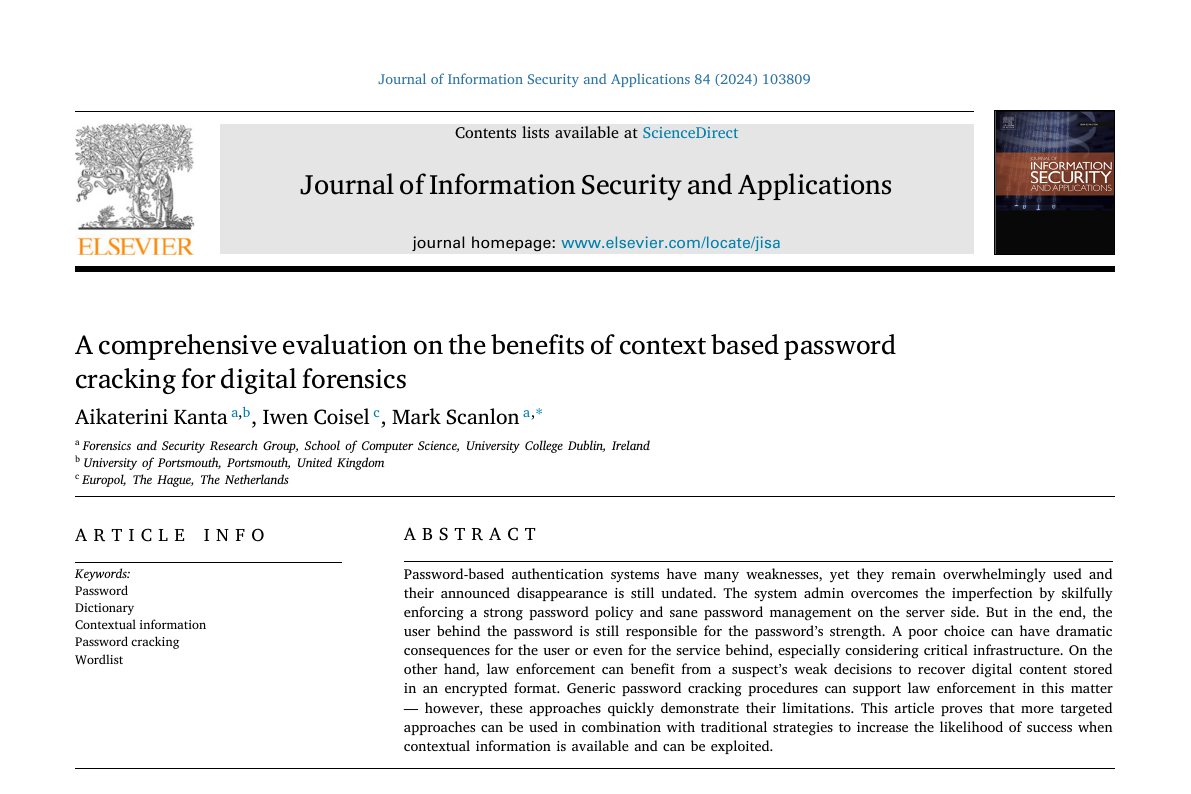
A Comprehensive Evaluation on the Benefits of Context Based Password Cracking for Digital Forensics

This paper evaluates the benefits of context-based password cracking for digital forensics, demonstrating that targeted approaches can increase the likelihood of success when contextual information is available. The study presents an experimental methodology and results section analyzing the approach's performance across ten datasets, proving the impact of context in password cracking.

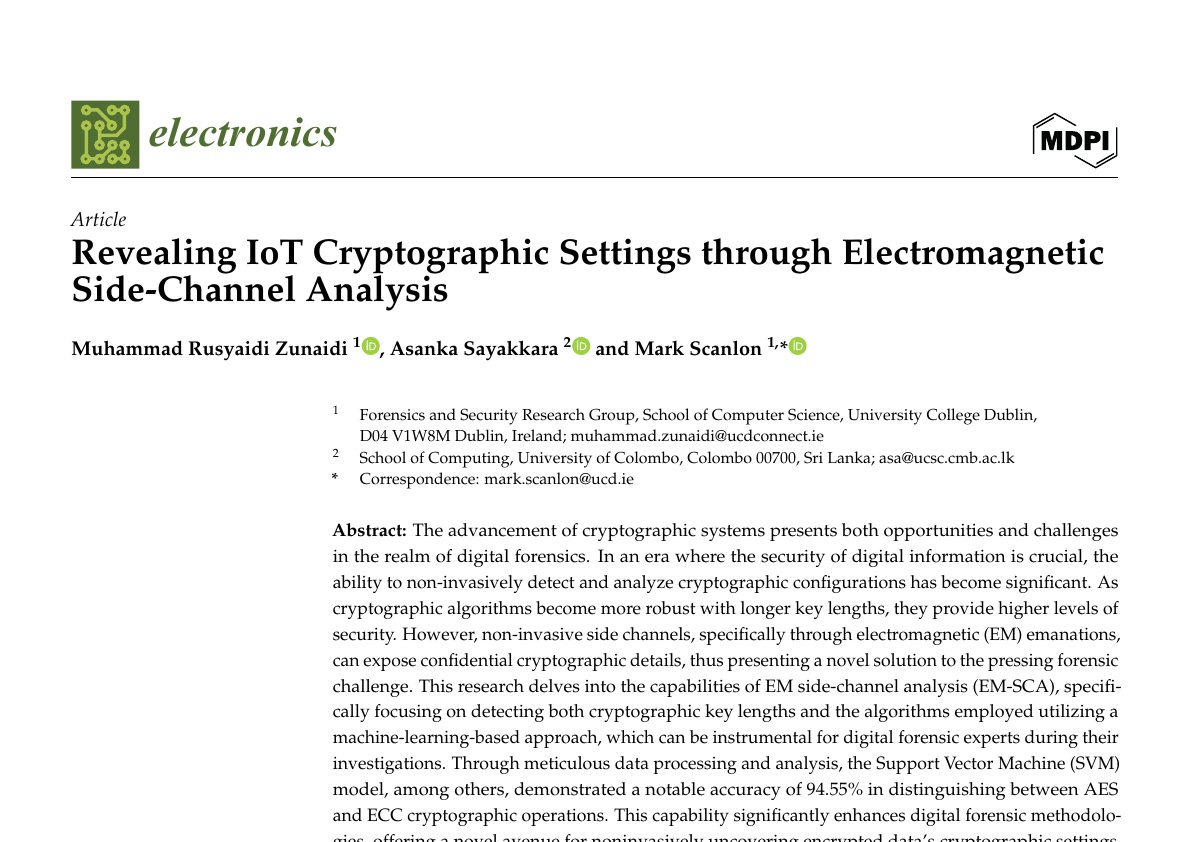
Revealing IoT Cryptographic Settings through Electromagnetic Side-Channel Analysis

This study explores the application of Electromagnetic Side-Channel Analysis (EM-SCA) for non-invasively detecting cryptographic settings in IoT devices. The researchers used a machine learning-based approach to identify key lengths and algorithms employed in IoT devices, demonstrating a notable accuracy of 94.55% in distinguishing between AES and ECC operations. This method has significant implications for digital forensic investigations, offering a novel approach for uncovering encrypted data's cryptographic settings.

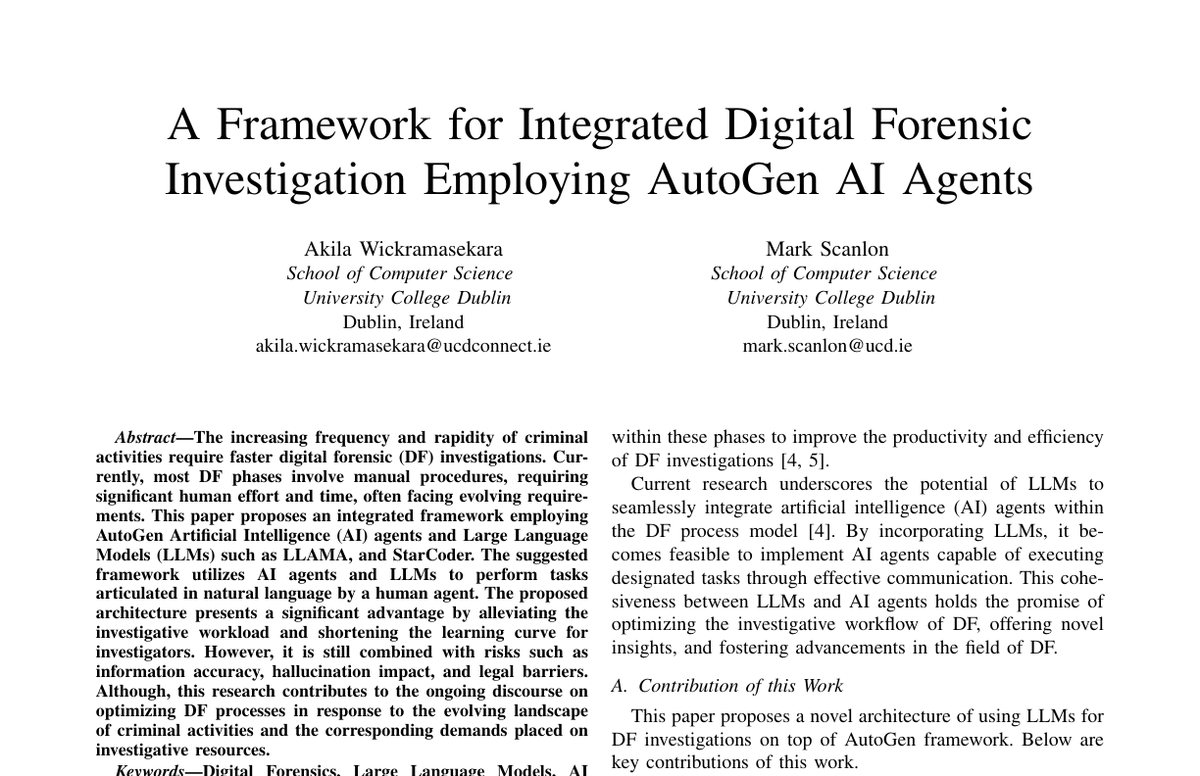
A Framework for Integrated Digital Forensic Investigation Employing AutoGen AI Agents

This paper proposes an integrated framework for digital forensic investigations employing AutoGen AI agents and Large Language Models (LLMs) to alleviate investigative workload and shorten the learning curve for investigators. The framework utilizes AI agents and LLMs to perform tasks articulated in natural language by a human agent, addressing the challenges of evolving requirements and information accuracy.

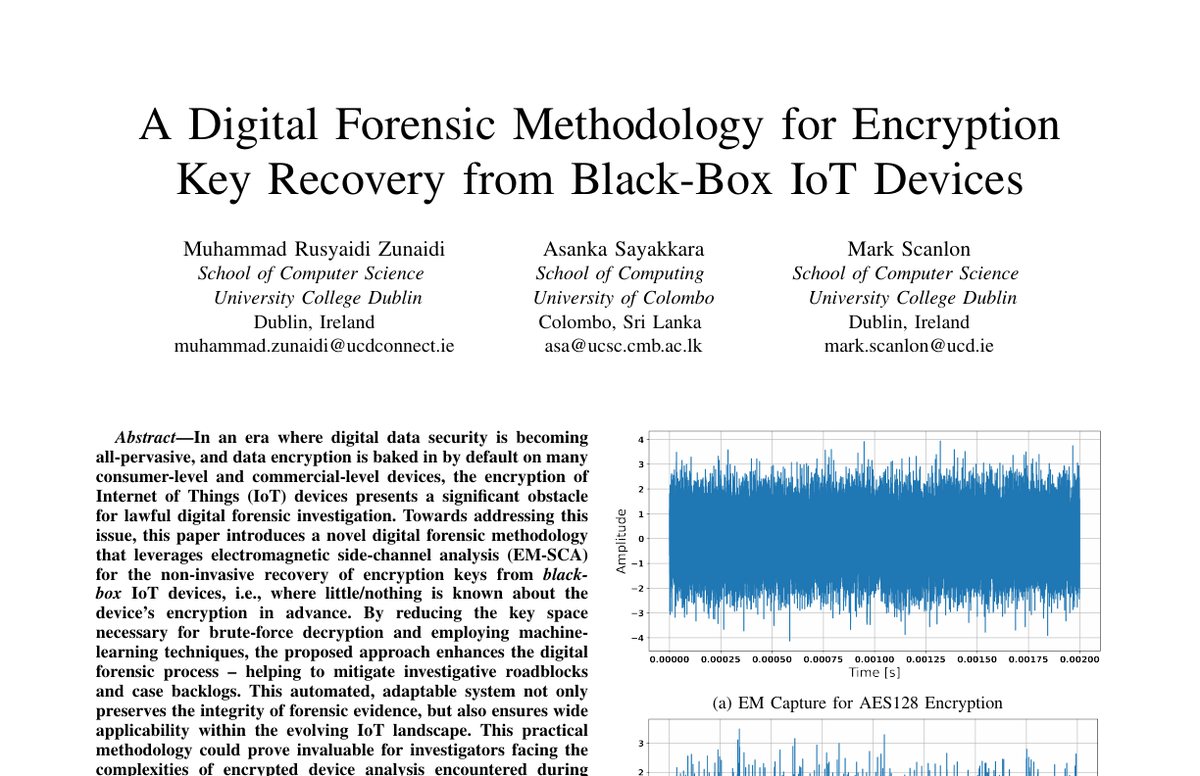
A Digital Forensic Methodology for Encryption Key Recovery from Black-Box IoT Devices

This paper presents a novel digital forensic methodology for recovering encryption keys from black-box IoT devices using electromagnetic side-channel analysis (EM-SCA). The approach leverages machine learning techniques to enhance the digital forensic process, reducing key space and mitigating investigative roadblocks. This automated, adaptable system preserves forensic evidence integrity and ensures wide applicability in the evolving IoT landscape.

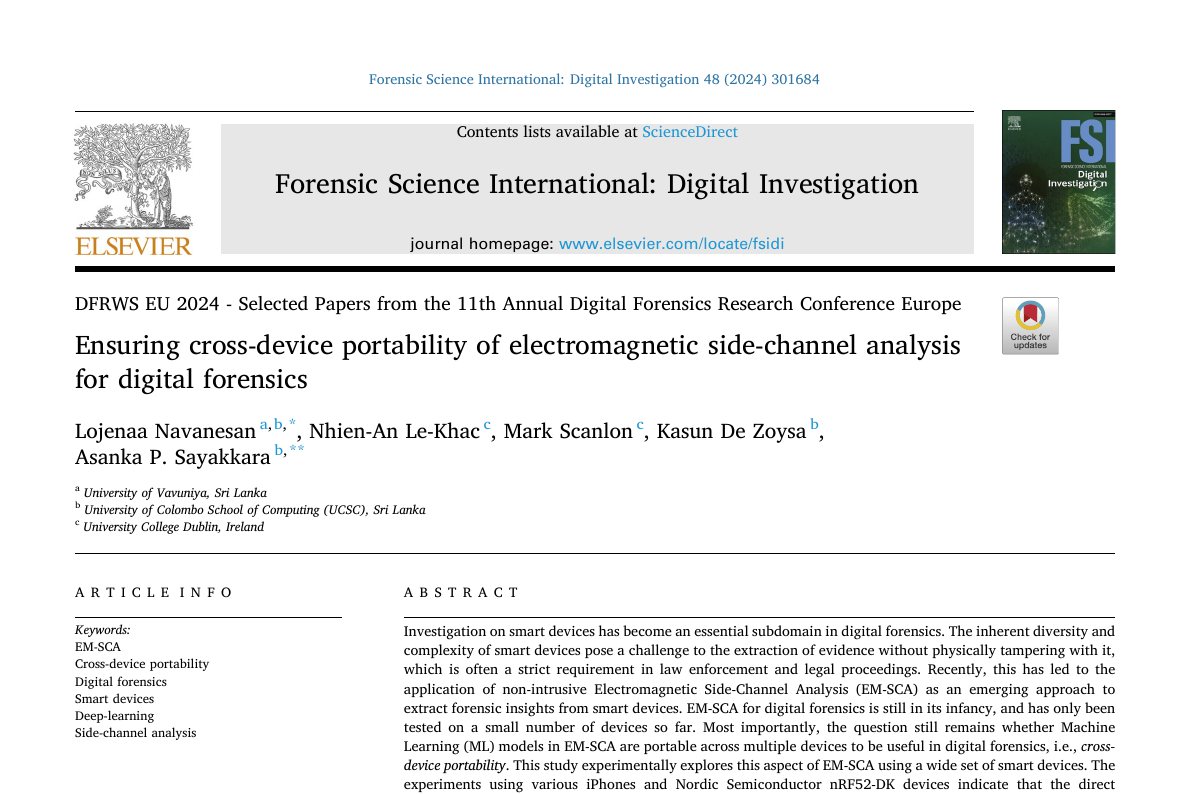
Ensuring Cross-Device Portability of Electromagnetic Side-Channel Analysis for Digital Forensics

This study investigates the cross-device portability of Electromagnetic Side-Channel Analysis (EM-SCA) for digital forensics, exploring its applicability to various smart devices. The authors experiment with different devices, including iPhones and Nordic Semiconductor nRF52-DK, and demonstrate the effectiveness of transfer learning techniques in achieving high accuracy.

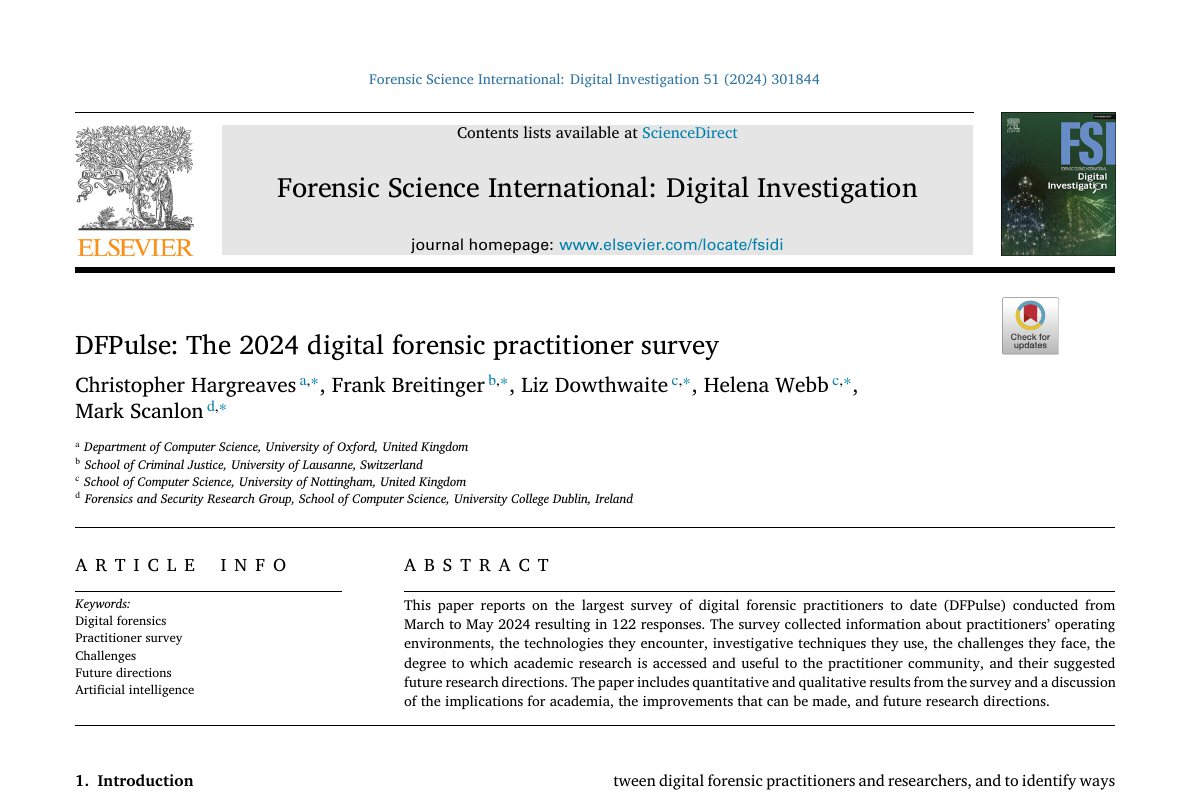
DFPulse: The 2024 digital forensic practitioner survey

This paper presents the results of the largest digital forensic practitioner survey to date, DFPulse, conducted in 2024. The survey collected data from 122 practitioners worldwide, providing insights into their operating environments, technologies used, challenges faced, and future research directions. The study aims to improve collaboration between academia and practitioners, addressing the gap between research and practice in digital forensics.

Context-Based Password Cracking for Digital Investigation

This thesis presents a context-based password cracking approach for digital investigation, introducing a methodology and framework for creating and assessing custom dictionary wordlists for dictionary-based password cracking attacks. The approach leverages contextual information to generate bespoke password candidate lists, achieving significant improvements over traditional approaches, with over 50% improvement in some instances.

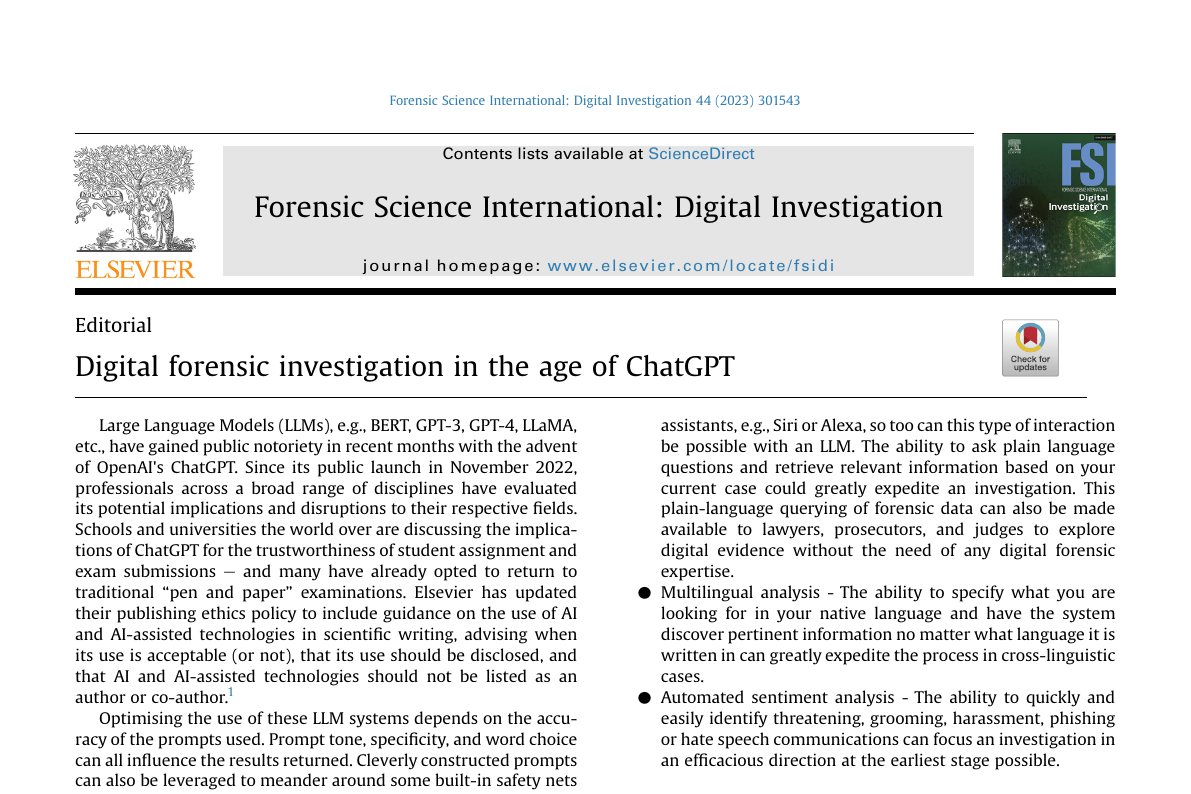
Digital forensic investigation in the age of ChatGPT

This editorial discusses the implications of ChatGPT on digital forensic investigation, highlighting both beneficial use cases and potential risks. It explores the use of Large Language Models (LLMs) in generating scripts, question answering, multilingual analysis, and automated sentiment analysis, while also addressing concerns about bias, errors, and overreliance on these systems.

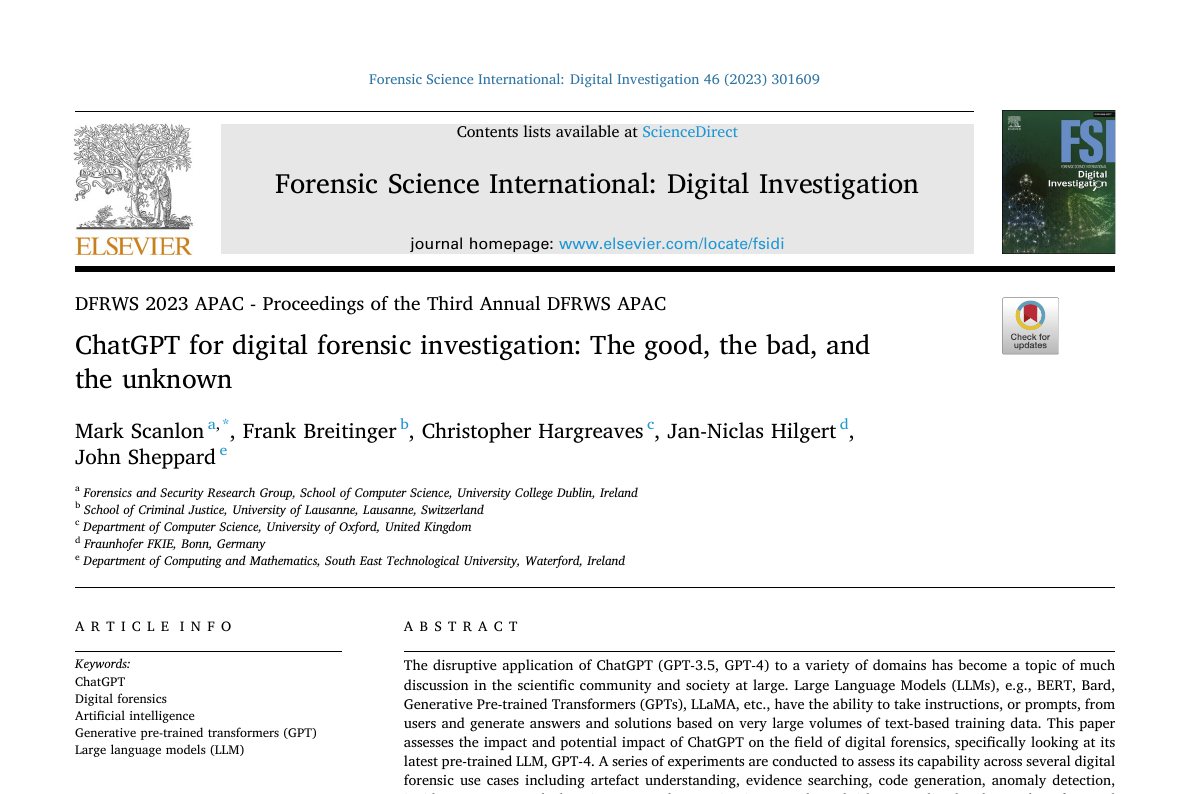
ChatGPT for digital forensic investigation: The good, the bad, and the unknown

This paper assesses the impact of ChatGPT on digital forensics, evaluating its capabilities and risks in various use cases, including artefact understanding, evidence searching, code generation, anomaly detection, incident response, and education. The study highlights both the potential benefits and limitations of using ChatGPT in digital forensic investigations, concluding that it can be a useful supporting tool for knowledgeable users but requires careful consideration of its strengths and weaknesses.

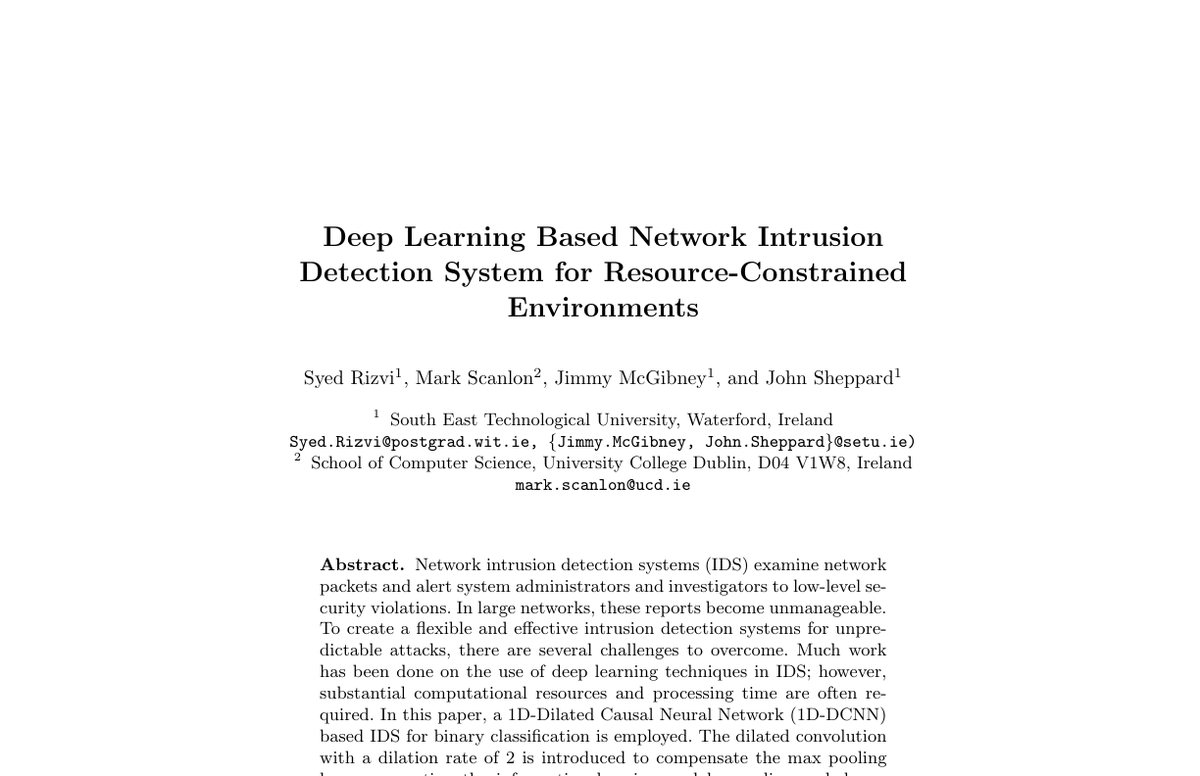
Deep Learning Based Network Intrusion Detection System for Resource-Constrained Environments

This paper presents a deep learning-based network intrusion detection system (IDS) for resource-constrained environments. The proposed 1D-Dilated Causal Neural Network (1D-DCNN) model achieves high accuracy in detecting malicious attacks, outperforming existing deep learning approaches. The model's efficiency and effectiveness make it suitable for resource-constrained environments.

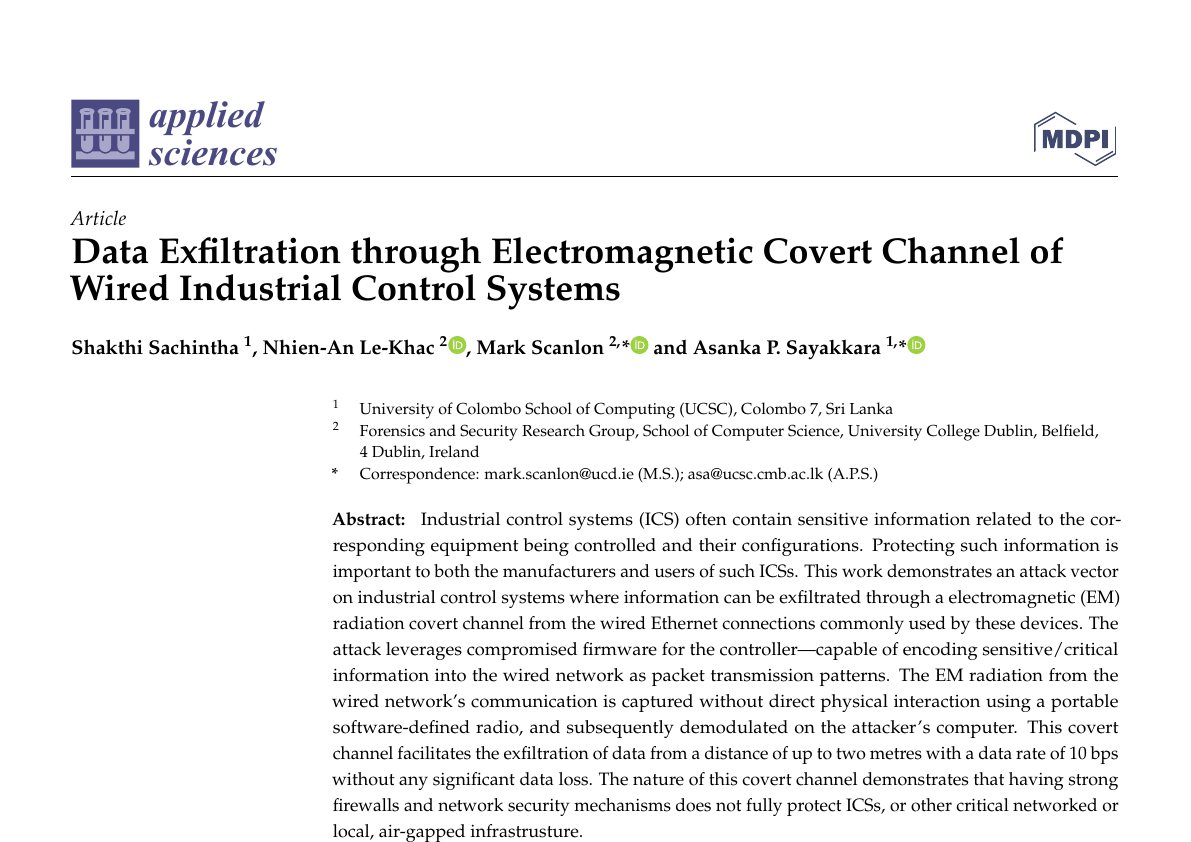
Data Exfiltration through Electromagnetic Covert Channel of Wired Industrial Control Systems

This study demonstrates a novel attack vector on industrial control systems (ICS) that leverages electromagnetic (EM) radiation from wired Ethernet connections to exfiltrate sensitive information. The attack exploits compromised firmware to encode data into packet transmission patterns, which are then captured and demodulated by an attacker's software-defined radio. This covert channel facilitates data exfiltration from up to two meters away with a 10 bps data rate.

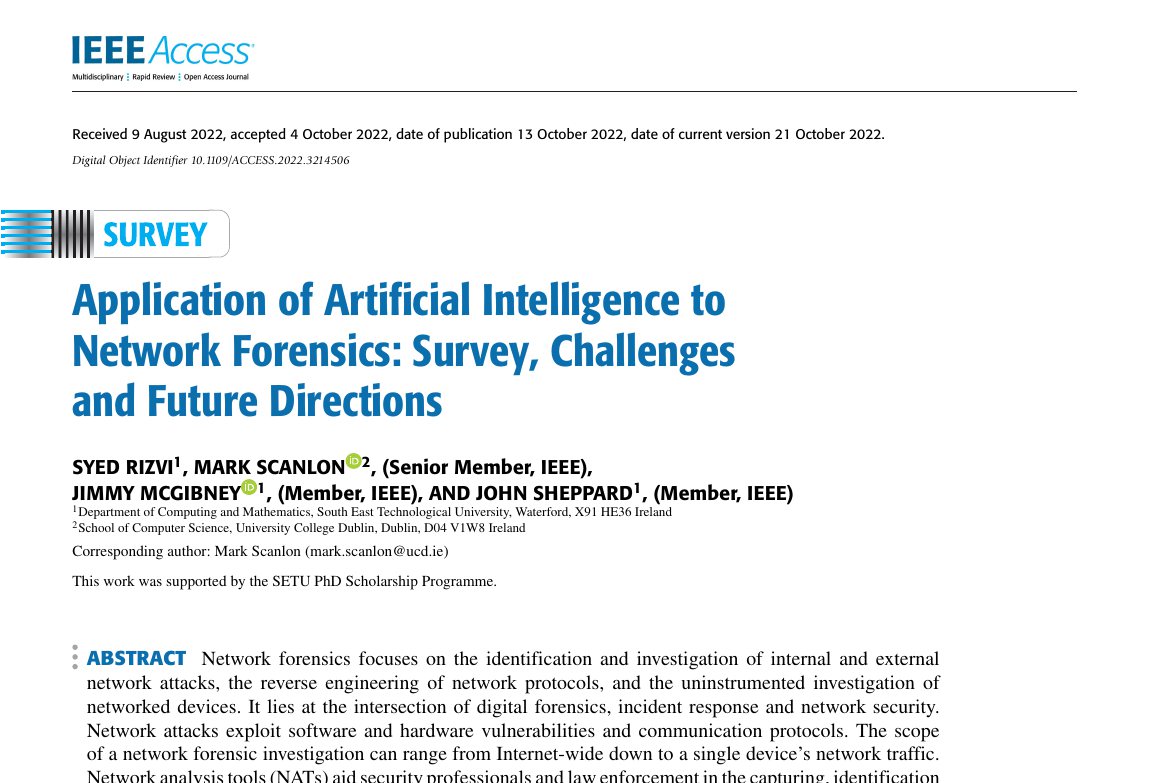
Application of Artificial Intelligence to Network Forensics: Survey, Challenges and Future Directions

This paper provides a comprehensive survey of the application of artificial intelligence (AI) in network forensics, including expert systems, machine learning, deep learning, and ensemble/hybrid approaches. It discusses the current challenges and future directions in network forensics, covering various application areas such as network traffic analysis, intrusion detection systems, and Internet-of-Things devices.

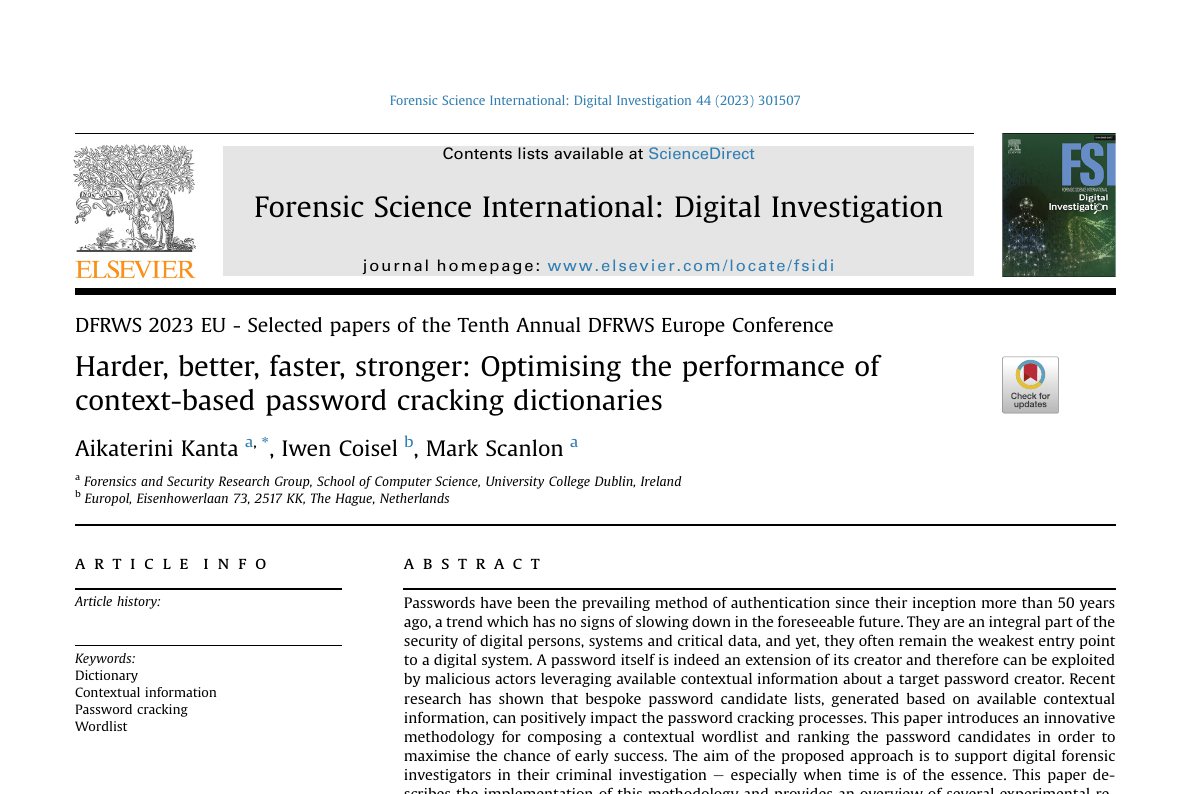
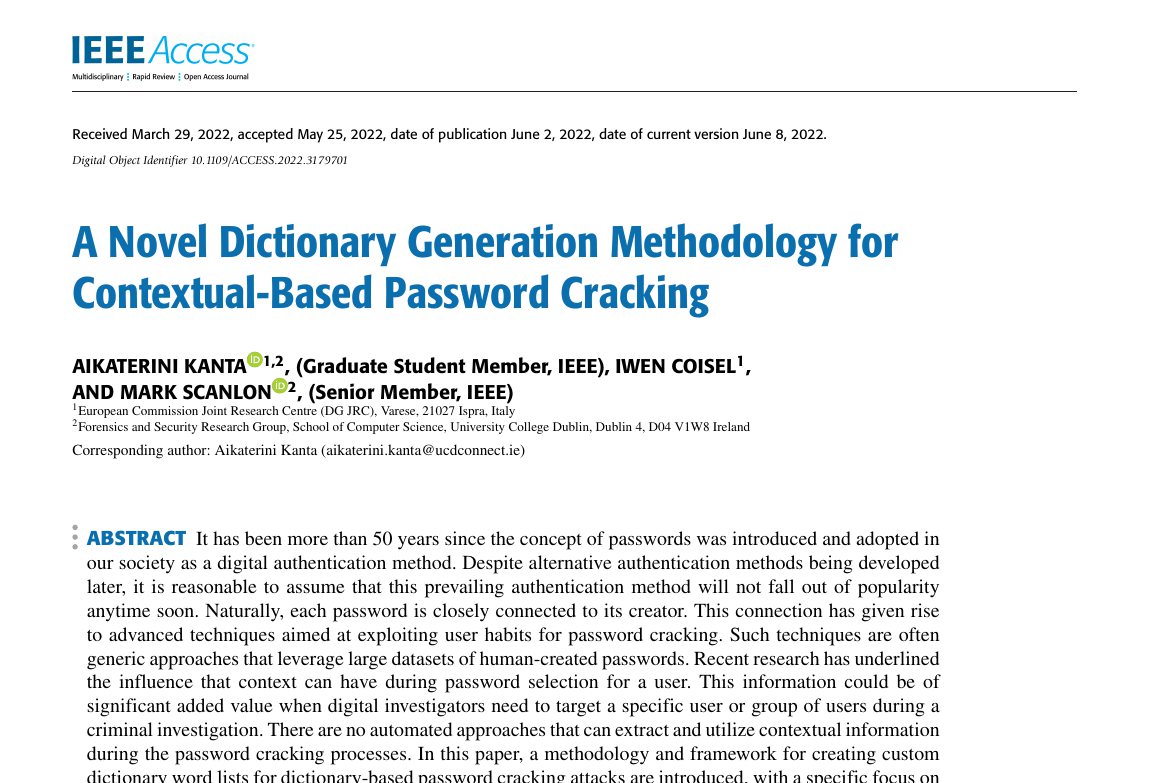
A Novel Dictionary Generation Methodology for Contextual-Based Password Cracking

This paper introduces a novel dictionary generation methodology for contextual-based password cracking, enabling the creation of custom dictionary word lists for dictionary-based password cracking attacks. The approach leverages contextual information encountered during an investigation, such as user habits and personal information, to generate targeted password candidates. This methodology has the potential to expedite password cracking processes in law enforcement investigations.